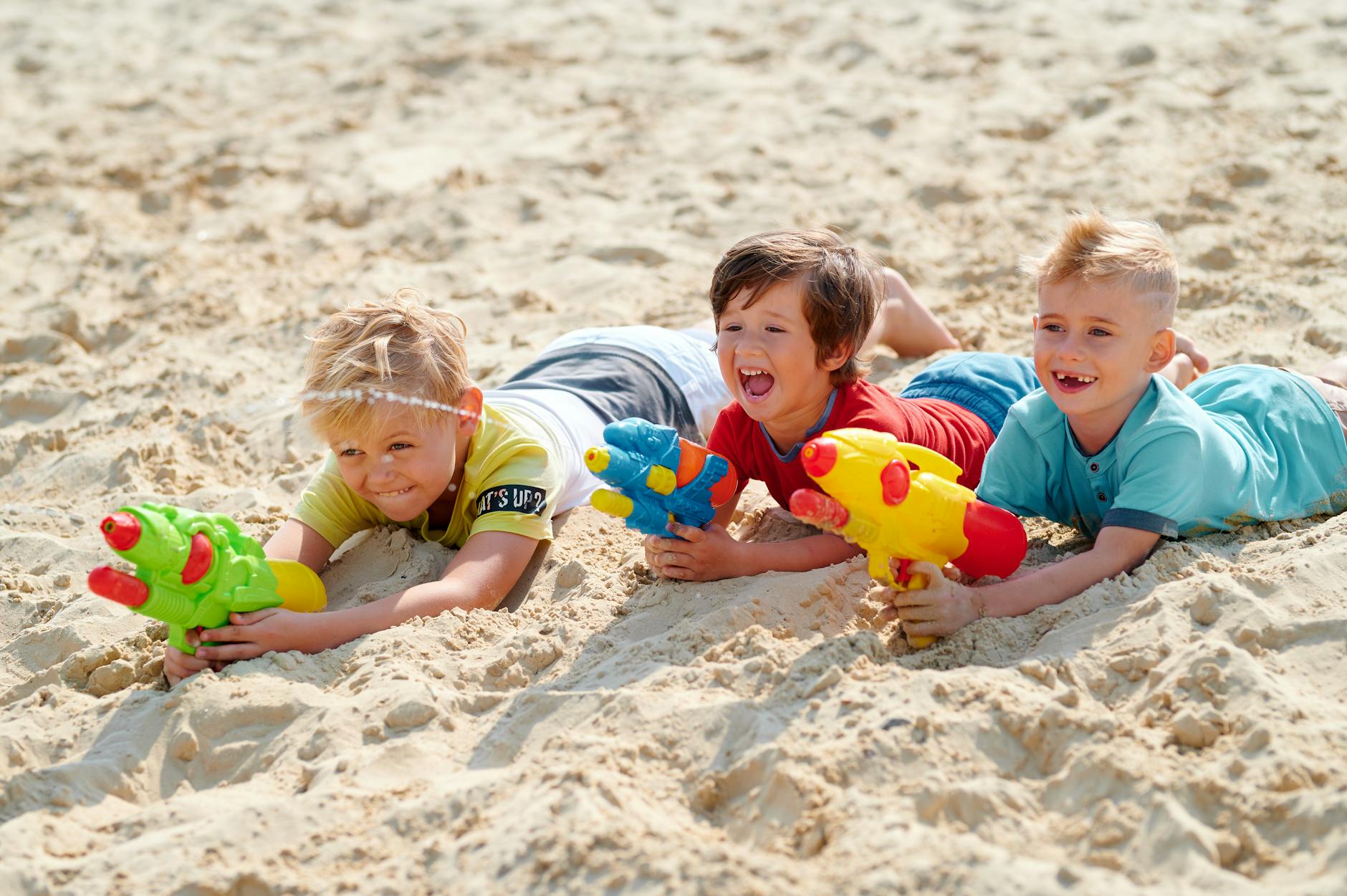
The best foam rocket launchers for kids ages 5-12 deliver one thing above everything else: a launch that is high enough and far enough to make a child sprint. The whole category works because of the chase — the rocket goes up, hangs for a second, and lands 20-40 feet away in a direction nobody quite predicted. That loop (pull, launch, sprint, retrieve, repeat) produces the kind of sustained outdoor play that parents talk about all summer. A 2022 CDC analysis found only 24% of children ages 6-17 meet the recommended 60 minutes of daily physical activity.
Quick Answer
The foam rocket launcher category works best for kids ages 5-12 because the mechanism is simple enough for a 5-year-old to operate independently, the flight distance is exciting enough for a 12-year-old to keep trying to beat, and the foam construction means parents can hand it over without worrying about windows, siblings, or pets. A 2021 American Heart Association report estimated that fewer than 1 in 4 U.S. children ages 6-17 meet daily moderate-to-vigorous activity targets.
Why Are Kids Ages 5-12 So Drawn to Foam Rocket Launchers?
Kids are drawn to foam rocket launchers because the launch-and-chase loop satisfies three core developmental drives simultaneously: the physical power of launching something, the unpredictability of where it lands, and the competitive energy of sprinting to retrieve it first.. A 2020 American Academy of Pediatrics report recommended adding 60+ minutes of daily outdoor time for children to support physical and mental health.
The launch is the hook. The first time a child pulls back the slingshot and watches a foam rocket arc 35 feet into the sky — that moment is what creates the “again, again, again” response. The mild unpredictability of the flight (wind, angle, pull force all vary it slightly) means every launch is slightly different, which is exactly what keeps kids engaged across dozens of repetitions.
Gross motor skills get a genuine workout in the launch-and-chase loop. The pulling motion engages shoulder and arm muscle groups. The sprint to retrieve builds cardiovascular output. The aim iteration — learning how angle and pull strength affect distance — builds spatial reasoning and proprioceptive feedback. This is play that is also physical development, even if the kids doing it have no idea.
The AAP recommends 60 minutes of moderate-to-vigorous physical activity daily for children ages 6-17. Thirty minutes of competitive rocket launching with a sibling or neighborhood friend covers that in one session — at a level of fun that makes the exercise invisible.
Which Foam Launch Toys Have the Best Payoff for the Price?
The foam launch toys with the best payoff-to-price ratio are slingshot-style rocket launchers (greatest height-to-cost ratio), EVA foam gliders (longest glide time for gentler play), and foam boomerangs (highest skill ceiling for older kids who want mastery over distance and return).
We designed every Refresh Sports product around one question: will this get a family playing together in under a minute? That is why the Toss and Catch Ball Game Set ($27.97) comes ready to play out of the box, the Water Flying Discs – Splash Discs ($9.97) float so they never sink to the bottom of the pool, and the Airplane Toy Glider – EVA Foam ($9.39) flies far enough to make a 5-year-old sprint. Our full lineup — from the Mini Toss Lacrosse Sticks ($37.97) to the Large Beach Ball – 27 inch 8-Panel ($15.97) and Stringy Balls & Sensory Toys ($13.97) — is built for the real way families play: mixed ages, mixed skill levels, and about 45 minutes before someone needs a snack.
The specific launch toys in our lineup, by play style:
The highest-energy launch (ages 5-12):
The Slingshot Rocket Launcher – Foam Rockets ($19.87) uses an elastic launch mechanism to send foam rockets 30-40 feet high. The launch requires enough pull to engage real arm strength — a 5-year-old can do it, and a 12-year-old will still be pulling as hard as they can trying to maximize height. The foam rockets are lightweight enough to be completely safe in any open outdoor space: backyard, park, field, beach.
The precision glider (ages 5-10):
The Airplane Toy Glider – EVA Foam ($9.39) is a different play pattern — less vertical, more horizontal. The glider arcs across a field rather than straight up, and the game becomes about technique: arm angle, release point, and reading wind. Kids who master the basic forward throw start experimenting with banking turns and loop releases within a few sessions. At $9.39, it is the best-value launch toy in the outdoor play category.
The mastery option (ages 7-12):
The Beach Boomerang Toy ($17.97) and Boomerang for Kids & Adults – EVA Foam ($14.95) are the skill-ceiling play options in the launch category. A boomerang that returns consistently requires real technique — and that is the draw for older kids. The first successful return is a genuine achievement moment that hooks kids into weeks of practice.
What Ages Get the Most From Each Launcher?
Ages 5-7 get the most from the Slingshot Rocket Launcher because the cause-and-effect is immediate and the success is guaranteed within the first pull; ages 8-10 can use all three options simultaneously; ages 10-12 shift toward the boomerang category as skill mastery becomes more motivating than pure novelty.
| Age Range | Best Launcher | Why It Works |
|---|---|---|
| 5-7 | Slingshot Rocket Launcher ($19.87) | Immediate, dramatic, zero skill required |
| 7-9 | Glider + Rocket combo | Two complementary play patterns, never boring |
| 9-12 | Boomerang + Rocket | Skill-based mastery + high-energy option |
| Mixed-age siblings | All three out simultaneously | Each kid gravitates to their level naturally |
The mixed-age sibling case is where the launch toy category really earns its keep. A 6-year-old and an 11-year-old can both be launching in the same yard at the same time — one working on rocket altitude, one working on boomerang return technique — without one of them being bored or frustrated. Family play that works across a 5-year age gap without modification is rare, and the launch toy category delivers it.
What Do Parents Say After the First Weekend?
Real parents consistently report three surprises: how long the slingshot rocket holds attention (often 90+ minutes), how competitive siblings get without adult facilitation, and how quickly a child masters independent use.
Real parent feedback on foam rocket launchers — and specifically what they weren’t expecting — consistently hits three themes:
- How long it holds attention. “I thought we’d use it for 20 minutes. My kids were out there for two hours.” The launch-and-retrieve loop is more self-sustaining than most outdoor toys because it does not require an opponent, a net, or an adult to facilitate.
- How competitive siblings get. “My kids spent the whole afternoon trying to out-launch each other. I had to call them in for dinner.” The Slingshot Rocket Launcher ($19.87) naturally generates sibling competition without parental setup.
- How little setup it takes. “I handed it to my 6-year-old, showed her once, and she was off.” That zero-friction start is by design — every product in our outdoor toys line is tested to the standard that a child should be able to start playing independently within 30 seconds.
The Boomerang for Kids & Adults – EVA Foam ($14.95) gets the most “I didn’t expect that” feedback specifically because adults get into it. What starts as something bought for the kids turns into a skill the adults are spending the weekend mastering too. We’ll call that a win.
What Makes Foam Construction the Right Choice for Kids’ Outdoor Blasters?
Foam toys — specifically EVA foam — are the material choice for kids’ outdoor launch toys for three practical reasons: they do not hurt on impact (a misfired rocket that hits a sibling or a window is not a crisis), they are weatherproof (left in the yard overnight or in the rain, no damage), and they are visible (bright foam colors are easy to spot in grass, so nothing gets lost).
Hard plastic alternatives exist in the launch toy category and consistently generate parent regret — bruised shoulders, broken windows, and “we can never use it near the house” restrictions that effectively remove the toy from daily use. Age-appropriate outdoor play gear is foam for exactly this reason.
References
- American Academy of Pediatrics. (2018). Physical Activity Guidelines for Children and Adolescents. healthychildren.org.
- Deci, E.L., & Ryan, R.M. (2000). Self-determination and intrinsic motivation in human behavior. Psychological Inquiry, 11(4).
- National Institute for Play. (2023). The science of play: Physical play and development outcomes. nifplay.org.
- CDC. (2023). Physical Activity for Children and Adolescents. cdc.gov/physicalactivity.
- For the developmental science behind active play and why launch-and-chase toys build motor skills, visit raisingactivekids.com. For an unbiased buying guide to the full outdoor toy category, see backyardplayguide.com.
- CDC physical activity guidelines for children and adolescents
- American Heart Association — physical activity recommendations for kids